
Alexander
Schenk
biography
At the age of 14, I was already teaching traditional karate to children and teenagers several days a week. After graduating from high school, I began studying sports science with a focus on medical training therapy in Tübingen. During my studies, I trained karate athletes and taught over 20 hours a week in fitness, Pilates, and karate.
I was particularly passionate about anatomy and biomechanics, orthopedics, pathology, and traumatology. My focus was on helping people, and word quickly spread about the successes I achieved both as a trainer in competitive sports and in the treatment of joint pain.
I received a job offer from the Top Tennis Academy Stuttgart, where ATP top 100 players such as Michael Berrer, Andreas Beck, John Millman, Yannick Maden, and many other professional tennis players and young athletes were training at the time. In the early years, I had the opportunity to prepare several professionals for the world's biggest tennis tournaments and support them in their physical development.
Gradually, my reputation spread, and more and more athletes from different sports sought my support. Today, I coach:
- members of the armed forces
- soccer player
- martial artist
- triathletes
- acrobats
- track and field athletes
- golfers
- tennis player
In addition, I support anyone who wants to develop further—regardless of whether they are an athlete or not. The principles I apply are universal.
Over the years, I have specialized in advising people with long-standing joint problems. Many who have already undergone various therapies find a pain-free way back to their everyday life or sports through my advice and support.
For the first appointment, I set aside between two and three hours to gain a thorough understanding of each person's current condition and medical history. It is important to me that everyone feels taken seriously and can attend their first appointment without any uncertainties. Therefore, the following applies to everyone who undergoes the initial biomechanical test: payment is only required if I am actually able to help and you feel that you are in the right place.
For many years, my team and I have been working on developing software that enables humanoid robots to understand human biomechanics and anatomy in order to train people in sports or accompany them on their way back after injuries. Three components are essential for this:
- Biomechanics algorithms: These enable the robot to assess a person's condition and take the appropriate action. To accomplish this task, I founded Motion Nexus GmbH, which develops, tests, and improves these algorithms.
- Voice-to-voice communication: This enables athletes, patients, or users to have the same experience as communicating with a real trainer, physical therapist, or doctor. Our company, Kibio Labs GmbH, integrates biomechanics algorithms into OpenAI's large language model technology for this purpose.
- Assessment of movement quality in a defined context: At the end of 2024, we will establish another company whose task will be to train models that can qualitatively assess movement patterns and place them in context. These models will enable the humanoid robots of the future to recognize technical improvements in a 5-year-old's soccer kick, a simple squat after cruciate ligament surgery, or a somersault during preparation for a European championship.
All three areas combined form the software that my team and I will be working on for the next 20 years. It will enable humanoid robots to support every person worldwide in every context of human biomechanics.
My projects
Your digital trainer in your pocket
With the founding of Motion Nexus GmbH, I have created a company that works on algorithms that are implemented in mobile apps. Just like my biomechanical analysis, these algorithms analyze the biomechanics and anatomy of your body. In conjunction with various requirement profiles for different sports such as karate or tennis, the app provides you with a suitable training plan that reduces your weaknesses and strengthens the aspects relevant to your sport.
Artificial intelligence for biomechanics
The task of Kibio Labs GmbH is to link biomechanical algorithms with large language models in order to make my knowledge of training theory, biomechanics, and anatomy available to an intelligent system. This will enable anyone to consult artificial intelligence with any question they may have about joint problems, athletic performance, or training in general. Our prototype is in the final stages of development and is already being tested by the team. At the time of publication of this website, the company is in the pre-startup phase.
ninja sports school
With the Kuromaru Ninja Sports School, I have fulfilled a childhood dream of my own. Who hasn't always wanted to be a ninja? The concept of the ninja school combines the art of martial arts with acrobatic tricks, secret communication techniques, and exciting adventures.
team members
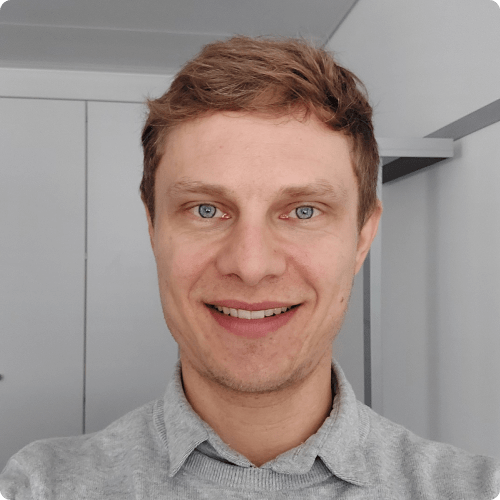
Julian Rösch
Julian Rösch, 32 years old, single, currently residing in Lonsee near Ulm.
's studies and career My professional career after secondary school began with a technical college entrance qualification and an apprenticeship as a carpenter. I then worked for a year as a carpenter's assistant on construction sites before completing my bachelor's degree in project management/civil engineering and going on to do a master's degree in engineering management. During two six-month stays abroad in Guatemala and Argentina, I had the opportunity to get to know other countries and cultures while studying, and I now speak fluent English and Spanish. After graduating, I worked as a construction manager for a large construction company for four years.
However, after many years in the construction industry, I realized that this industry would not give me the fulfillment I was looking for, so I started looking elsewhere. At exactly the same time, I was receiving individual coaching from Alexander Schenk as an athlete and was able to experience his unique working methods and comprehensive expertise firsthand. I was so fascinated by all of this that I decided, "I want to do that too," and help people with their complaints and further their athletic development.
I joined Alexander Schenk's team at the beginning of the year and have successfully completed my biomechanics training. Since then, I have been working closely with him in the areas of pain counseling and athlete support. I am currently successfully coaching several athletes on a one-on-one basis, helping them achieve a pain-free life and reach their personal goals.
Motorcycle racing
My greatest passion for over 12 years has been motorcycle racing. I travel throughout Europe to the world's most famous Grand Prix racetracks and compete in amateur races for the fastest lap times and the best placings. The basis for fast lap times is, on the one hand, good confidence in the tires and, on the other hand, good feedback from the chassis elements.
Through further training and courses in the field of motorcycle suspension and my own experience in racing, I am able to optimize the handling of the motorcycle by adjusting the geometry and the spring and damping settings so that the rider can fully exploit their riding potential without an increased risk of crashing and can simply feel comfortable on the motorcycle.
Endurance sports
I have been an avid triathlete for over 5 years. Each of the three disciplines has its own appeal and charm. Swimming, cycling, and running make up the majority of my daily routine and give me mental relaxation on the one hand and a deep sense of satisfaction after hard work on the other. After successfully completing a 70.3 Ironman (half distance), I now have my sights set on further goals such as a marathon and a full Ironman. I am also very involved in cycling and compete in long-distance races such as the Alb-Extrem and the Ötztaler Radmarathon. Thanks to my own experience in endurance training, I understand the interrelationships and can make appropriate recommendations and create individual training plans.
Nutrition
Due to health problems in my youth, such as digestive problems, frequent infectious diseases, and taking many medications, I became interested in healthy nutrition at an early age and was able to get my own problems under control. For over 15 years, I have been educating myself about healthy nutrition and am now able to help athletes with health problems and provide basic recommendations and suggestions for improvement. I myself have been eating a purely plant-based (vegan) diet for over 7 years and, due to histamine intolerance, an almost histamine-free diet, and I feel better than ever before.